Resources
What is Strategic Psychotherapy?
Strategic Psychotherapy is a practical, focused therapy approach that helps identify the patterns, beliefs, and emotional responses that keep people feeling stuck. Rather than only exploring why problems exist, therapy focuses on understanding how the problem continues and building practical strategies to create meaningful change.
What is EMDR Therapy?
EMDR (Eye Movement Desensitisation and Reprocessing) is an evidence-based therapy approach often used to support people experiencing trauma, anxiety, distressing memories, and emotional overwhelm. EMDR aims to help the brain process difficult experiences differently, reducing their emotional intensity over time.
What is Clinical Hypnosis?
Clinical Hypnosis is a therapeutic approach that uses focused attention and guided techniques to support emotional wellbeing, behaviour change, stress reduction, and coping skills. It is not about losing control, but rather helping people access internal resources and create change in a structured and supportive way.
What is Gut-Directed Hypnotherapy?
Gut-Directed Hypnotherapy is a specialised therapy approach designed to support the connection between the brain and digestive system. It may help people experiencing IBS and stress-related digestive symptoms by combining therapeutic hypnosis, nervous system regulation, and practical strategies aimed at supporting the gut–brain connection.
How Stress Impacts the Gut
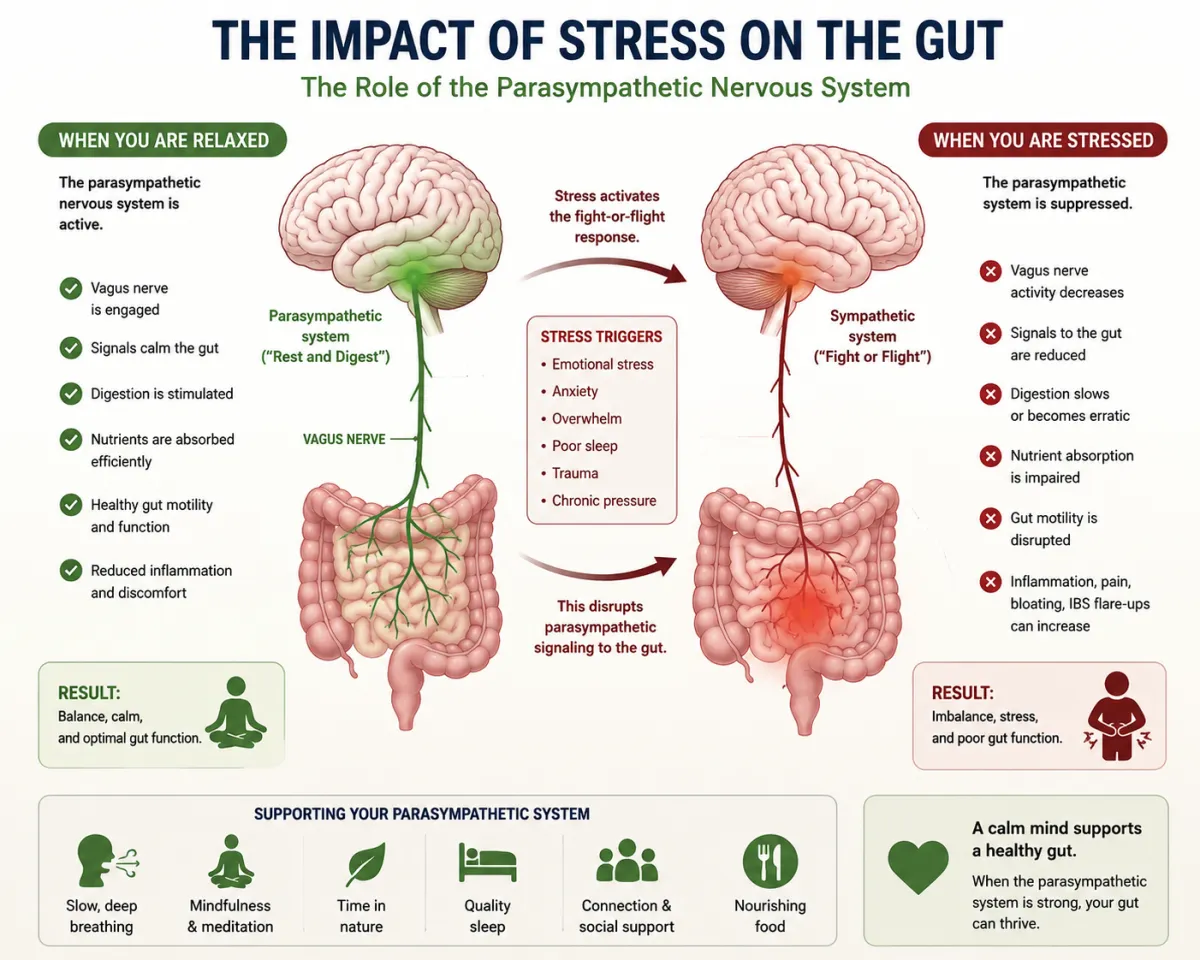
Stress affects more than thoughts and emotions — it can also influence digestion, gut sensitivity, bowel habits, and physical comfort. Understanding how the nervous system interacts with the digestive system can help explain why stress may contribute to symptoms such as bloating, abdominal discomfort, urgency, or digestive changes.
Understanding Anxiety and Overthinking
Anxiety and overthinking can create cycles that keep people feeling stuck, overwhelmed, or constantly on alert. Learning how thoughts, emotions, and behaviours interact is often an important step toward building confidence, emotional flexibility, and more helpful coping patterns.
Fight, Flight, Freeze, and Fawn Explained
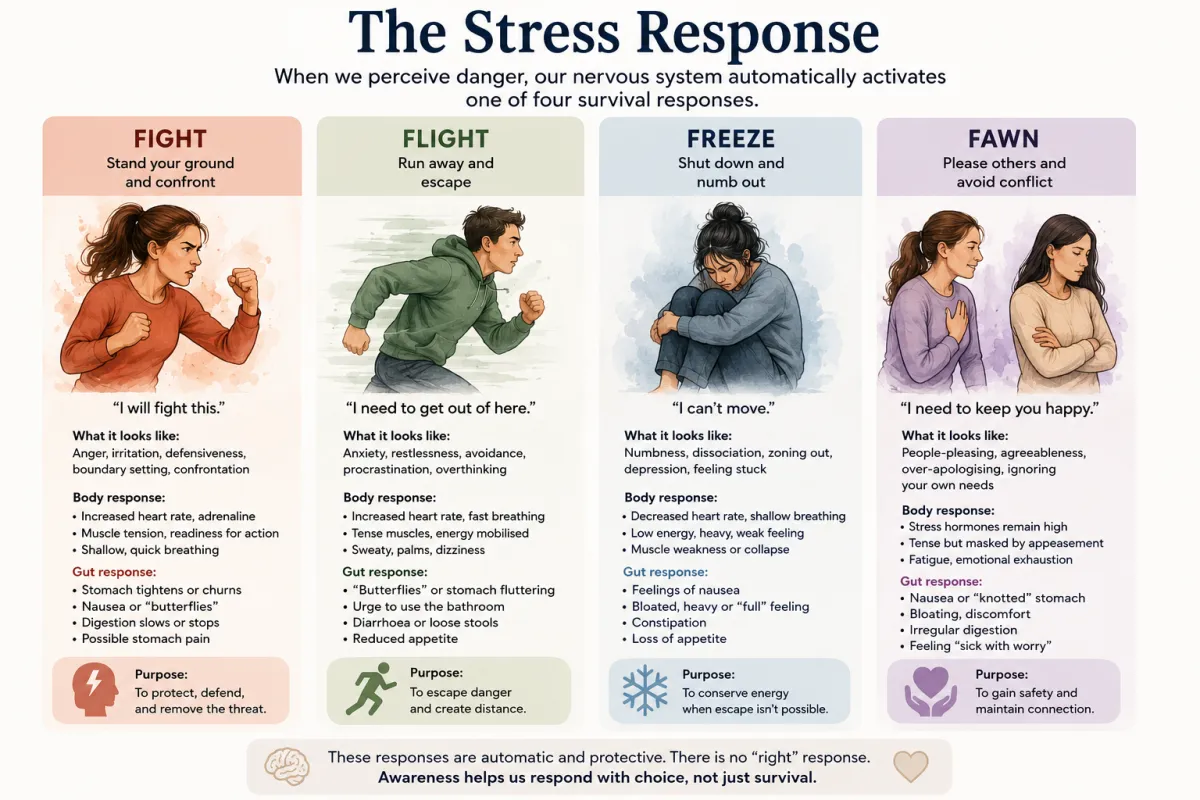
Fight, flight, freeze, and fawn are common stress responses designed to help keep us safe. When stress systems become overactive, people may notice anxiety, overwhelm, people-pleasing, avoidance, or feeling emotionally shut down. Understanding these responses can help build awareness and practical strategies for change.
The Gut–Brain Connection
The brain and digestive system are constantly communicating through what is known as the gut–brain connection. Stress, emotions, sleep, and physical health can influence digestion, while digestive symptoms may also impact emotional wellbeing. Understanding this connection can help support a more holistic approach to health.
What Happens in Your First Therapy Session?
Starting therapy can feel uncertain. The first session is designed to better understand your concerns, explore goals, discuss what has been happening, and begin developing a plan for support. Therapy is tailored to the individual, creating a space that feels collaborative, practical, and supportive.
Therapy vs Counselling: What's the Difference?
Therapy and counselling are terms often used interchangeably, but approaches can differ. Counselling may focus on providing support, problem-solving, and coping strategies, while therapy can involve deeper work around patterns, emotions, behaviours, and long-term change. The right approach depends on your goals and needs.
Useful Resources
I’d Love to Help
Get In Touch